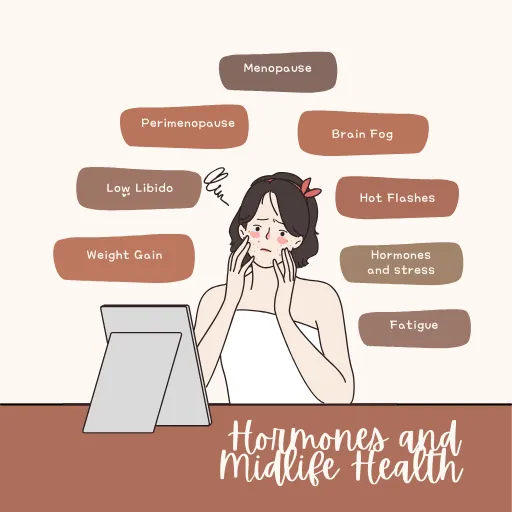
Perimenopause Weight Gain Around the Middle? Start Here
Perimenopause weight gain around the middle happens because shifting hormones change where your body stores fat, while muscle loss, short sleep and chronic stress pile on. Research shows fat gain speeds up as the menopause transition begins. Hormones are only part of the story, so start with stress, sleep, protein and strength training.
Same jeans. Same workouts. Same salads you've been packing for years.
And somehow there's a new roll sitting on top of the waistband that wasn't there last spring.
If you're in your late 30s to 50s, I hear this all the time. Women doing everything "right" and watching their middle grow anyway. I've been there too. Working out, eating clean, and still stuck with weight that wouldn't move. So, okay, but WHY?
Why Perimenopause Weight Gain Shows Up Around the Middle
Let's get a little nerdy for a second. I promise it helps.
The biggest long-term study of midlife women in the US is called SWAN. When researchers followed women's body composition through the change, the rate of fat gain doubled right as the menopause transition began, and lean mass started to drop. Those changes kept going until about two years after the final period, then leveled off.
Where the fat goes changes too. Mayo Clinic notes that midlife women may gain up to 0.7 kg (about 1.5 pounds) a year, and that menopause shifts fat toward the center of the body. That shift holds up even after researchers account for aging.
So no, you're not imagining it.
Mayo Clinic also says hormonal changes alone don't necessarily cause weight gain. Muscle loss, sleep and even genetics play a role. Estrogen gets all the blame. It's rarely working alone.
Estrogen Is the Seventh Domino, Not the First
Everybody wants to start with estrogen. In my experience, estrogen is the seventh domino. The ones that fall first are usually stress, sleep and muscle.
Stress is the gas pedal. Most of us have had a foot on it since the first baby. Your body can sprint. It can't sprint for fifteen years. In a Yale study published in Psychosomatic Medicine, lean women who carried more fat around their middle released more cortisol under stress than women who carried it on their hips. That's a link, not proof that stress caused it. But it lines up with what so many women feel.
Sleep is next. In a Mayo Clinic sleep study, 12 healthy adults who slept 4 hours a night for two weeks ate over 300 extra calories a day and gained 11% more visceral fat, the deep belly fat around your organs. Now picture a perimenopausal woman up at 3 a.m. most nights. The Menopause Society points out that sleep and mood changes during this season make healthy habits harder to stick with. Of course they do.
Then muscle. Muscle naturally drops with age, and losing it slows how many calories your body burns, per Mayo Clinic. Less muscle, more stress, less sleep. Then the hormone shifts of your 40s land on a body that's already running on fumes.
That's why I teach it in this order in my 90-day HARVESTS program: calm the stress system first, then work up the line.
Your middle isn't a character flaw. It's a signal, and estrogen is rarely the first domino to fall.
What's Driving Your Middle? A Quick Comparison
Most women have more than one of these going at once. Look for the row that sounds the most like your week.
| Driver | What's going on | What you might notice | First small step |
|---|---|---|---|
| Hormone shifts | Fat gets stored more centrally | Waist changes even when the scale barely moves | Track your cycle and symptoms for a month |
| Chronic stress | Stress system stuck in "on" | 3 p.m. crash, sugar cravings, wired at bedtime | Ten-minute walk after supper |
| Short or broken sleep | Appetite and belly fat storage go up | Up at 3 a.m., snacking more the next day | Lights out by 10, phone out of the bedroom |
| Muscle loss | Your body burns fewer calories | Same weight, softer shape, weaker lifts | Strength training twice a week |
| Low protein | Harder to hold on to muscle | Hungry an hour after breakfast | Protein at breakfast |
| Family pattern | Genetics affect where fat lands | Mom and aunts carried it in the middle too | Focus on the five you can change |
You can't change your genes. You can change almost everything else on that list.
What I Changed (and What Didn't Work)
I teach this stuff, and I still needed help. After years of coaching other people on their health, I set my ego aside and hired a health coach for myself.
We kept it boring. Workouts three times a week (most of the time). A daily protein goal of 160 grams. Water. That number was mine, set with my coach for my body, so please don't copy it without talking to your own provider. But the basics, protein and water first, made the biggest difference of anything I've paid for. I gained energy and lost pounds.
What didn't work? Guessing. Before that, I was working out harder while running on fumes, snapping at my kids, and wondering why nothing moved.
The other thing that doesn't work is quitting at week three. I wrote about this in my newspaper column this fall. "The work and the reward rarely happen at the same time." We lift for three weeks, look in the mirror, see the same middle and decide it isn't working.
Maybe it just hasn't worked yet.
"Maybe we need to stop digging up the seed every three weeks to see if it's growing."
A Simple Plan for Perimenopause Belly Fat
None of this is glamorous. All of it counts.
Lift something heavy twice a week. Mayo Clinic recommends strength training at least twice a week, which also helps protect bone. Add 150 to 300 minutes of brisk walking a week and you've covered the basics.
Eat protein at breakfast. Not coffee and a granola bar in the truck. Real protein early helps you protect muscle and quiets the mid-morning hunger.
Guard your sleep like it's a paycheck. Same bedtime. Phone charging in the kitchen. If you're waking at 3 a.m. most nights, that's worth looking into, not just living with.
Take your foot off the gas. A ten-minute walk after supper. Five quiet minutes before the house wakes up. If you want to know what your stress hormones are doing, you can see what your cortisol is doing across the day with an at-home saliva test and review it with a provider.
Talk with your provider when:
- The weight came on fast, or with other changes like hair loss, a racing heart or feeling cold all the time
- You've done the basics consistently for a few months and nothing has budged
- You're wondering about hormone therapy for your symptoms
On that last one, The Menopause Society is clear that hormone therapy should not be used for weight management. If you're curious about it for other symptoms, that's a conversation for you and your provider.
Ready to Work on Your Middle in the Right Order?
You don't need another 30-day challenge. You need a plan that starts with stress, sleep and muscle, and gives it enough time to work.
Look inside my 90-day HARVESTS program →
Not sure where to start? Take the one-minute quiz and it'll point you to your best next step.
This article is education, not medical advice. Talk with your own provider about your symptoms, weight changes and any testing.
Frequently Asked Questions
Why am I gaining weight around my middle in perimenopause?
As hormones shift, your body starts storing more fat around the middle instead of the hips. A long-term study of midlife women found the rate of fat gain doubled as the menopause transition began while muscle declined. Stress, short sleep and muscle loss make it worse.
Does perimenopause belly fat go away after menopause?
Not on its own. In the SWAN study, fat gain and muscle loss continued until about two years after the final period, then leveled off. Leveling off isn't the same as reversing, so strength training, protein and sleep still matter after menopause.
Can cortisol cause belly fat?
Research links them. A Yale study found lean women with more belly fat released more cortisol under stress, and a Mayo Clinic study found two weeks of short sleep increased deep belly fat by 11%. That's a link, not proof, but stress and sleep are worth addressing first.
Will hormone therapy fix perimenopause weight gain?
The Menopause Society says hormone therapy should not be used for weight management. When it's prescribed for other menopause symptoms, it may shift where fat is stored. Any decision about hormone therapy belongs with you and your provider.
What exercise is best for perimenopause belly fat?
Strength training at least twice a week is the priority because it protects the muscle you lose with age. Mayo Clinic also suggests 150 to 300 minutes of brisk walking a week. Pick the version you'll still be doing three months from now.
Who is Dr. Ashley Rath?
Dr. Ashley Rath is a functional health provider, keynote speaker and #1 best-selling author of Love Your Life and Yourself. She helps working women in their late 30s to 50s get to the root of exhaustion, stubborn weight and hormone changes through education, at-home testing and her 90-day HARVESTS program.
