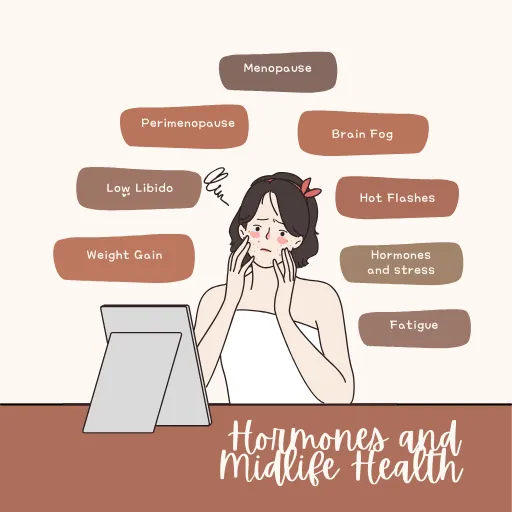
High Cortisol Symptoms in Women: What's Normal, What's Not
High cortisol symptoms in women often look like trouble sleeping, waking at 3 a.m., belly weight, cravings, brain fog and feeling wired but tired. True disease-level high cortisol (Cushing syndrome) is rare. Far more often the problem is timing: cortisol that stays up at night and flattens out by day. Testing across the day shows which one you're dealing with.
Supper at 8:45. Kids finally down at 10. You crawl into bed exhausted.
And your brain flips on like somebody hit the yard light.
Then 3 a.m. rolls around and you're wide awake again, mentally rearranging tomorrow. By 2 p.m. you'd trade a kidney for a nap and a cookie. Your labs came back "normal." Okay, but WHY do you feel like this?
What High Cortisol Symptoms Feel Like in Real Life
Let's get a little nerdy for a second. Cortisol is your main stress hormone. It raises blood sugar so you have fuel to run from a bear, or in our case, to get three kids, a farm and a business through a Tuesday.
That's a good thing. Short bursts are what it's built for.
The problem is when it never shuts off. Mayo Clinic says that when your stress response stays on too long, it can give you too much exposure to cortisol, and that can disrupt almost every process in your body. On their list: sleep trouble, weight gain, headaches, gut issues, and a harder time focusing and remembering things.
Here's how women describe it to me. Up at 3 a.m. Tired all day and wired at bedtime. Sugar and salt cravings by midafternoon. Belly weight that showed up out of nowhere. Snapping over nothing, then feeling guilty all night. Forgetting why you walked into the pantry. Ready to throat punch your husband because he chewed too loud.
That's not you being dramatic. That's a stress system that's been floored since the first baby.
True High Cortisol vs a Cortisol Rhythm That's Off
Most articles on high cortisol mash two very different things together. I want you to know the difference, because it changes what you do next.
The first is disease-level high cortisol. Cleveland Clinic explains that long-term high cortisol is usually Cushing syndrome, most often from high-dose steroid medications or a tumor. The signs are specific: weight gain in the face and belly, fat between the shoulder blades, wide purple stretch marks, and weakness in the upper arms and thighs. It's also rare. Researchers put it at 0.7 to 2.4 cases per million people per year when the body itself is making too much.
If those signs sound like you, don't sit on it. Call your provider this week.
The second is a rhythm problem. Healthy cortisol peaks in the morning right before you wake up and drops by evening. In a stressed-out woman, that curve can flip or flatten. Low when you need to get going. High when you're trying to sleep.
That one matters too. A review pulling together data from 80 studies linked flatter daily cortisol curves with poorer health in 10 of the 12 areas studied, including fatigue, depression and obesity.
| Disease-level high cortisol (Cushing syndrome) | Cortisol rhythm that's off | |
|---|---|---|
| How common | Rare | Common in busy, stressed women |
| Typical signs | Round face, purple stretch marks, fat between the shoulders, weak arms and legs | 3 a.m. waking, wired at night, dragging all day, cravings |
| What's going on | Body makes or receives far too much cortisol | Cortisol is high or low at the wrong times |
| Who to see | Your provider, soon | A provider who will look at the whole day, not one blood draw |
| Where to start | Medical workup | Testing across the day plus sleep, food and stress changes |
Most women don't need to fear a scary diagnosis. They need someone to look at what their cortisol is doing at 10 p.m., not just 8 a.m.
Why Cortisol Symptoms Pile Up in Perimenopause
If this all hit harder somewhere around 40, you're not imagining it.
The Seattle Midlife Women's Health Study followed women through the menopause transition for years. Researchers saw overnight cortisol rise in the 7 to 12 months after the late transition began, and the women whose cortisol went up in that stage had more severe hot flashes. That's an association, not proof that one caused the other. But it lines up with what so many women feel.
So now you've got shifting hormones landing on a stress system that's been sprinting for fifteen years. Of course sleep falls apart. Of course the middle gets softer.
This is why I say estrogen is the seventh domino, not the first. Stress and sleep usually fall first. In my 90-day HARVESTS program we calm the stress system before we chase anything else.
My Own Running-on-Fumes Season
I know this one from the inside.
There was a stretch where I was exhausted no matter what I did. I was snapping at my kids more than I care to admit, walking around in a fog, and stuck with weight that wouldn't move even though I was working out.
What didn't work? Pushing harder. More workouts on less sleep only dug the hole deeper.
What did? Finding out instead of guessing. I tested my cortisol with a simple saliva test, then used targeted supplements and lifestyle changes to bring it back where it belonged. I came out clearer, with more energy and a lot more control over my moods.
Symptoms have a root. You just have to look in the right place, at the right time of day.
How to Find Out What Your Cortisol Is Doing
One morning blood draw shows one moment. Your symptoms live in the other 23 hours.
Cortisol changes all day, and at night it should be at its lowest. That's why saliva testing, collected several times from morning to bedtime, is useful. It shows the shape of your curve, not just a single dot. You can do an at-home saliva cortisol test and review the results with a provider.
While you're figuring it out, start with the boring stuff that works:
- Protect your bedtime. Same time every night, lights down, phone charging in the kitchen.
- Eat protein at breakfast. Not coffee and a granola bar in the truck.
- Take your foot off the gas once a day. A ten-minute walk after supper or five quiet minutes before the house wakes up.
Talk with your provider soon if:
- You have the specific Cushing-type signs above, like wide purple stretch marks or a rounder face
- You take steroid medications and your symptoms are changing
- Your blood pressure or blood sugar is creeping up
- Your sleep, mood or energy has changed fast and nothing is helping
Not Sure Where Your Symptoms Are Coming From?
You're not crazy. You're not broken. And you don't have to guess.
Take the one-minute quiz to find your best next step →
Want to see your actual cortisol curve? The at-home saliva cortisol test maps it across the day. If you'd like to learn more about the root-cause approach, start there.
So, what's your body been trying to tell you at 3 a.m.?
This article is education, not medical advice. Talk with your own provider about your symptoms and any testing.
Frequently Asked Questions
What are the most common high cortisol symptoms in women?
Common signs include trouble sleeping, waking around 3 a.m., feeling wired at night and tired by day, cravings, belly weight, irritability and trouble focusing. Mayo Clinic links long-term stress and cortisol exposure to sleep problems, weight gain, headaches, digestive issues and memory trouble.
Is high cortisol the same as Cushing syndrome?
No. Cushing syndrome is disease-level high cortisol, usually from high-dose steroid medications or a tumor, and it is rare. Many more women have a cortisol rhythm that is off, with cortisol too high at night or too flat across the day.
Why do I wake up at 3 a.m. every night?
A cortisol rhythm that runs high at night can leave you wide awake in the early morning hours. Healthy cortisol should be lowest at night and highest just before you wake. Perimenopause, stress and blood sugar swings can all play a part, so it is worth looking into with a provider.
Can perimenopause raise cortisol?
Research suggests it can. The Seattle Midlife Women's Health Study found overnight cortisol rose in the 7 to 12 months after the late menopause transition began, and women with rising cortisol had more severe hot flashes. That is an association, not proof of cause.
How do you test cortisol levels at home?
An at-home saliva cortisol test has you collect saliva several times across one day, usually morning to bedtime. Because cortisol should be highest in the morning and lowest at night, multiple samples show the shape of your daily curve. Review results with a provider.
Who is Dr. Ashley Rath?
Dr. Ashley Rath is a functional health provider, keynote speaker and #1 best-selling author of Love Your Life and Yourself. She helps working women in their late 30s to 50s get to the root of exhaustion, stubborn weight and hormone changes through education, at-home testing and her 90-day HARVESTS program.
